
How Chores Reshape Family Bonds
A new study in Xi’an, China, examined how helping with household work affects the mental health of 1,152 junior middle school students. Researchers looked at the link between domestic labor and psychological well-being. The work focused on how family dynamics mediate this relationship.
Wellness insights
 Can AI Chatbots Replace Human Therapists?
 Global Mental Health Crisis Hits Young Adults Hardest
 Narcissistic Abuse Doesn't End When the Relationship Ends
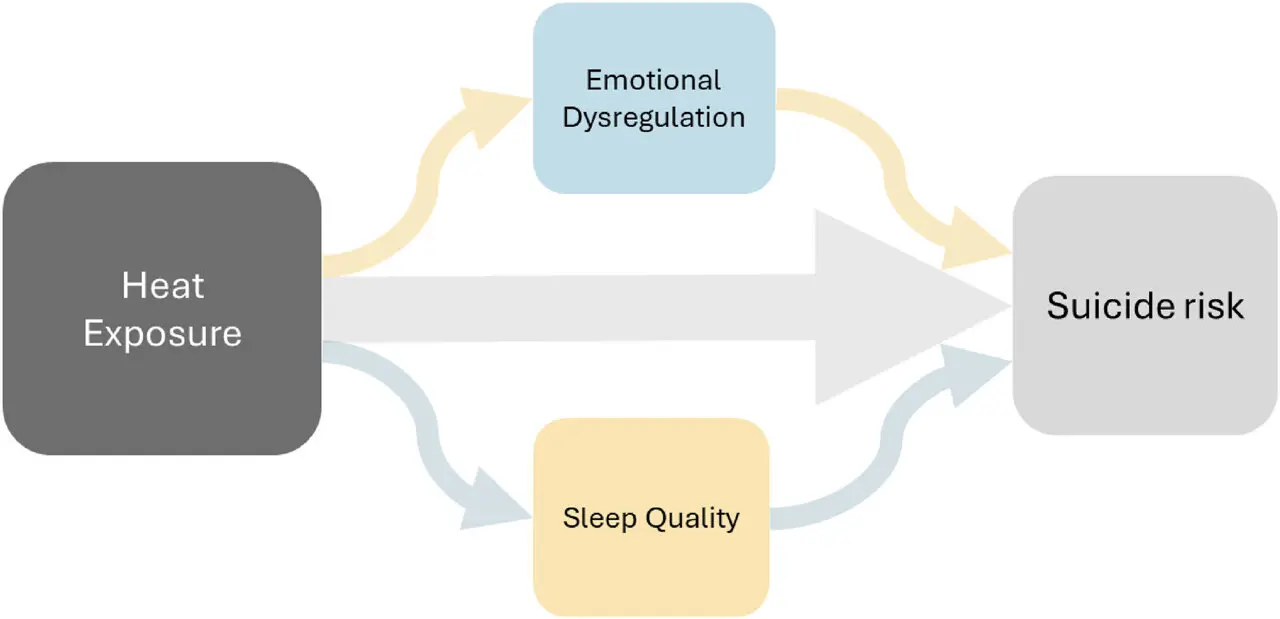 Scorching temperatures linked to higher suicide risk due to sleep loss
The study used a school-based survey to gather data. It tested a serial mediation model. This model explored how parent-child relationships and resilience act as pathways. The findings suggest that household work does not directly determine mental health. Instead, it shapes family interactions. These interactions then influence how well teens cope with stress.
Does Resilience Complete the Pathway?
Participation in household tasks can strengthen or strain parent-child ties. When families collaborate on chores, communication often improves. This collaboration builds trust. It also teaches responsibility. For some teens, this shared effort reduces feelings of isolation. The study found that the quality of the parent-child relationship was a key mediator. A positive relationship buffered against anxiety and depression.
Resilience is the second critical factor in the model. Teens who help at home may develop stronger coping skills. This resilience then protects their mental health. The research indicates that the benefit of household work depends on these internal strengths. Without resilience, the positive effects of family collaboration may be limited. The study highlights that both relational and personal factors matter.
Frequently Asked Questions
Does doing chores always improve teen mental health? Not automatically. The benefit depends on the quality of the parent-child relationship and the teen’s own resilience. If family dynamics are strained, chores may not help.
What role does resilience play in this connection? Resilience acts as the final step in the mediation chain. It determines whether improved family bonds actually translate into better mental health outcomes for the adolescent.