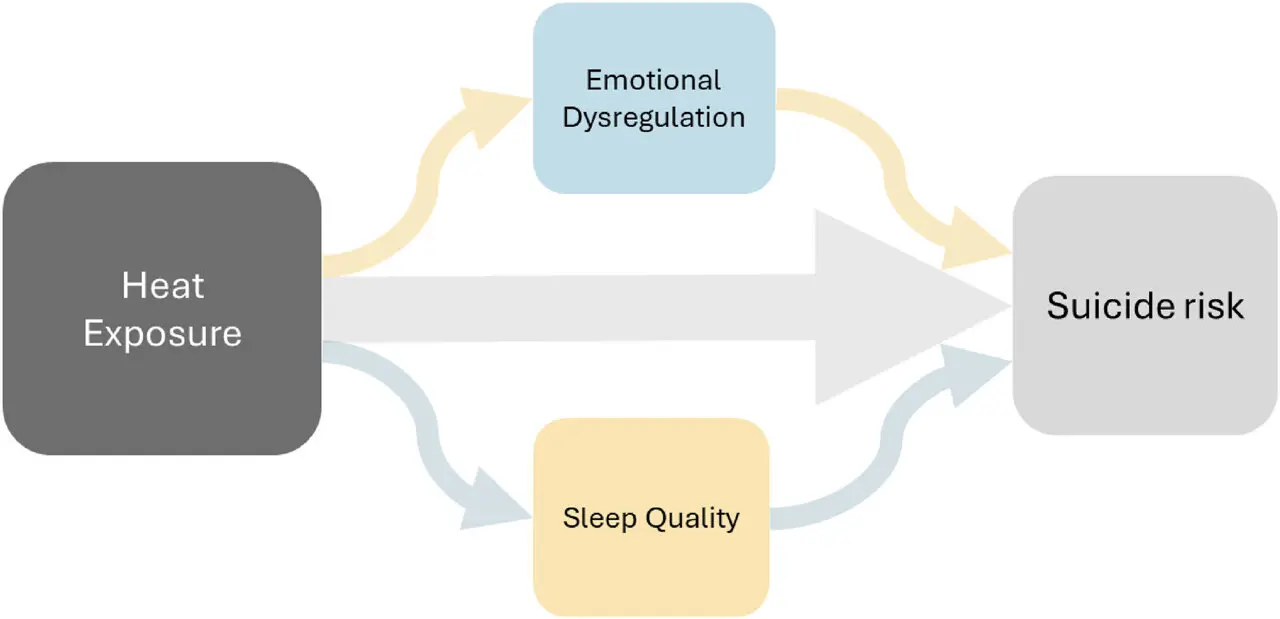
Thermal Stress and Emotional Volatility
Researchers at Georgetown University and the World Bank have identified a critical link between extreme heat and mental health. Lead author Syed Shabab Wahid, DrPH, spearheaded this investigation into climate-induced thermal stress. The team analyzed how rising global temperatures affect human physiology and psychological stability. This study highlights heat as a significant, yet often overlooked, public health threat.
Wellness insights
 Narcissistic Abuse Doesn't End When the Relationship Ends
 Relationships face unique stressors during young adulthood
 Earthquake aftermath reveals hidden mental health struggles in young survivors
 Dark Traits and Flawed Logic Drive Antisocial Behavior
The primary mechanism involves the disruption of sleep patterns. High ambient temperatures prevent the body from cooling down effectively at night. This leads to fragmented or insufficient rest. Without adequate sleep, the brain struggles to process emotions correctly. Consequently, individuals experience heightened irritability and reduced emotional resilience. These physiological changes create a vulnerable state for mental health crises.
The research indicates that heat exposure directly impairs emotional regulation. When the body overheats, cognitive functions degrade. People find it harder to maintain calm under pressure. This physiological strain compounds existing mental health conditions. The study suggests that climate change acts as a force multiplier for psychological distress. It is not merely a comfort issue but a safety concern.
Why Does Heat Affect the Brain?
Wahid and his colleagues emphasize the urgency of this finding. As global averages rise, heatwaves become more frequent and intense. Vulnerable populations face the greatest risk. This includes the elderly, those with pre-existing psychiatric disorders, and individuals living in urban heat islands. The data shows a clear correlation between temperature spikes and adverse mental health outcomes.
The brain relies on stable internal conditions to function optimally. Extreme heat forces the body to divert energy toward cooling mechanisms. This diverts resources away from higher-order cognitive tasks. Sleep architecture is particularly sensitive to thermal changes. Deep sleep stages are shortened when core body temperature remains elevated.
The loss of deep sleep disrupts memory consolidation and emotional processing. Over time, this chronic disruption can lead to depressive symptoms. It may also increase the likelihood of impulsive behaviors. The study underscores that mental health interventions must consider environmental factors. Ignoring the climate connection leaves a critical gap in care.
Frequently Asked Questions
How does heat specifically disrupt sleep? High temperatures prevent the natural drop in body temperature required for deep sleep. This results in lighter, more fragmented rest.
Who is most at risk from heat-related mental health issues? Individuals with existing mental health conditions, the elderly, and those in urban areas are most vulnerable.
What can be done to mitigate these risks? Improving access to cooling systems and recognizing heat as a mental health trigger are key steps.