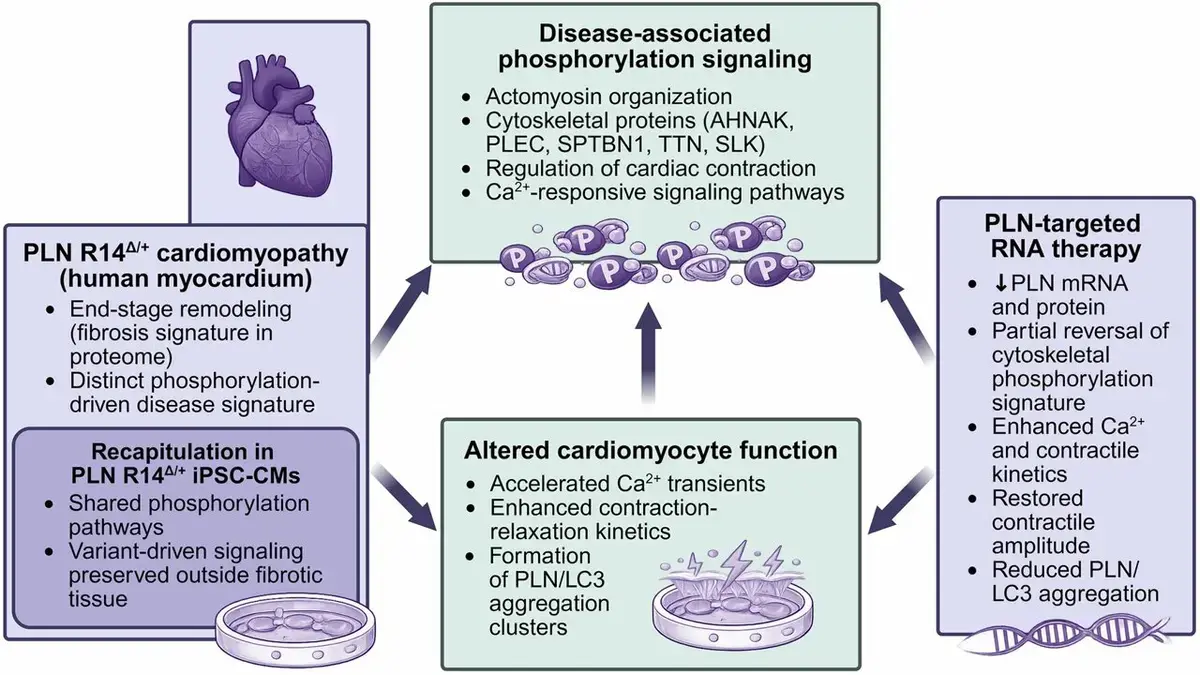
From Lab Bench to Patient Heart
A team of translational researchers at the University Medical Center Groningen reported a breakthrough in June 2026. Using heart tissue taken from patients with a hereditary form of cardiomyopathy, they tested an RNA‑based drug in stem‑cell derived cardiac models. The results bring the therapy a step closer to human trials.
Wellness insights
 Brain Wiring Explains Why Trauma Victims Struggle To Find Joy
 Healing Journey: A Therapist Reflects on Processing Deep Childhood Trauma
 Forest walks boost mood through sound and biodiversity awareness
 What Counselling in Two Different Countries Taught Me: Hansel Wong on Connection, Curiosity, and Culture
The scientists combined patient‑derived cardiac slices with induced pluripotent stem cells to recreate the disease environment in the lab. By delivering a short‑acting RNA molecule that corrects the faulty gene, they restored normal contractile function in more than 70 percent of the test tissues. The approach targets the root cause of the disease rather than merely managing symptoms, offering a potential cure for a condition that currently forces many patients onto transplant waiting lists.
Researchers explained that the RNA construct binds to the mutant messenger RNA, prompting the cell’s own machinery to produce a functional protein. „We observed a rapid and durable improvement in calcium handling, which is essential for heart muscle contraction,” said Dr. Anke van der Meer, lead investigator. The team measured force generation using micro‑tissue engineering platforms, noting a three‑fold increase compared with untreated samples. Importantly, the therapy showed no signs of off‑target effects in the surrounding cardiac cells, a common safety concern for gene‑editing strategies.
Can RNA Therapy Replace Traditional Treatments?
The study also leveraged a biobank of cardiac biopsies from families carrying the same genetic mutation. By testing the RNA drug across multiple patient samples, the researchers demonstrated consistent efficacy, suggesting the treatment could be broadly applicable to individuals with this genotype. Funding from the European Union’s Horizon program enabled the rapid translation from discovery to pre‑clinical validation, accelerating the timeline toward a Phase I trial.
While current management of genetic heart failure relies on medications, device implantation, and ultimately heart transplantation, RNA therapy promises a disease‑modifying alternative. Critics argue that long‑term durability and delivery to the adult heart remain unresolved challenges. The Groningen team counters that their delivery system, a lipid nanoparticle optimized for cardiac uptake, achieved sustained expression for up to eight weeks in animal models.
If successful in human trials, the therapy could reduce the need for invasive procedures and lower the burden on transplant services. However, regulatory pathways for RNA‑based drugs are still evolving, and large‑scale manufacturing will require new quality‑control standards. The researchers remain cautiously optimistic, emphasizing that safety data from the upcoming trial will determine whether the approach can truly supplant existing therapies.
The next phase involves a multicenter Phase I study slated for early 2027, enrolling patients with confirmed pathogenic variants. Positive outcomes could reshape the therapeutic landscape for inherited cardiomyopathies, offering hope to families previously faced with limited options.
Frequently Asked Questions
What type of genetic heart failure is being targeted? The therapy focuses on dilated cardiomyopathy caused by a single‑gene mutation that impairs the production of a structural protein essential for heart muscle function.
How is the RNA delivered to the heart? A lipid nanoparticle carrier transports the therapeutic RNA intravenously, allowing it to cross the endothelial barrier and enter cardiac cells.
When might patients see this treatment in the clinic? If the Phase I trial confirms safety and efficacy, regulatory approval could follow within three to five years, potentially reaching patients by the early 2030s.