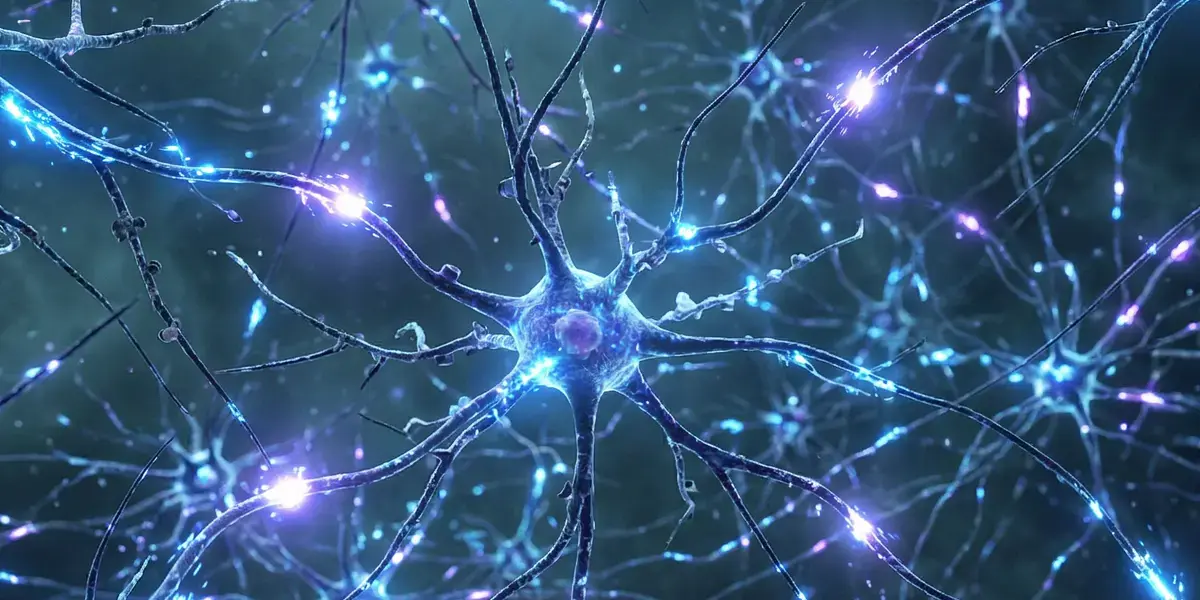
Rewiring the Visual World
Researchers have discovered that the brain’s visual processing isn’t passive. It actively reshapes its internal connections based on visual experiences. This study, conducted on mice, demonstrates the brain’s remarkable plasticity and learning capabilities. The findings offer new insights into how perception works.
Wellness insights
 Brain Wiring Explains Why Trauma Victims Struggle To Find Joy
 Healing Journey: A Therapist Reflects on Processing Deep Childhood Trauma
 Forest walks boost mood through sound and biodiversity awareness
 What Counselling in Two Different Countries Taught Me: Hansel Wong on Connection, Curiosity, and Culture
The brain doesn’t simply receive visual information. It constantly anticipates what the eyes will perceive. Internal feedback loops predict upcoming sights. These loops physically change, strengthening or weakening based on actual visual input. This process creates a dynamic system that learns from experience. Scientists used specialized goggles to alter the mice’s visual world.
Mice were fitted with goggles that distorted their vision. The goggles presented a shifted or compressed visual field. Researchers then monitored the brain activity of these mice. They observed significant changes in the visual cortex. The brain’s internal map of the visual world began to adjust. It compensated for the distorted input from the goggles. This adjustment happened through physical rewiring of neural connections.
Can Our Brains Be Easily Misled?
This isn’t merely a correction of vision. The brain didn’t just try to „undo” the distortion. Instead, it fundamentally altered its internal representation of space. The feedback loops adapted to the new, artificial reality. This suggests the brain prioritizes building an accurate model of the world. It doesn’t necessarily care about the absolute truth of the sensory input. The brain's predictive coding mechanisms were clearly at work.
The experiment reveals the brain’s susceptibility to external influence. If the visual input is consistently altered, the brain will adapt accordingly. This raises questions about how our perceptions are shaped by our environment. It also highlights the potential for illusions and misinterpretations. The brain actively constructs reality, and this construction can be surprisingly malleable.
The implications extend beyond basic vision. This principle likely applies to all sensory systems. The brain constantly learns and adapts to its surroundings. This allows us to navigate a complex and ever-changing world. Understanding this process is crucial for treating neurological disorders. It could also lead to new approaches in artificial intelligence.
Frequently Asked Questions
What does this mean for understanding illusions? Illusions work by exploiting the brain's predictive mechanisms. They present sensory information that conflicts with the brain's expectations. This causes the brain to construct a distorted perception of reality.
Is this brain plasticity limited to young animals? While plasticity is greatest during development, the brain retains the ability to rewire itself throughout life. This study shows that even adult brains can adapt to altered visual input. However, the rate of change may slow with age.
Could this research help people with vision loss? Potentially. By understanding how the brain adapts to visual changes, researchers might develop therapies to help people compensate for vision loss. This could involve training the brain to interpret remaining visual information more effectively.