How Enrichment Rewires the Synaptic Map
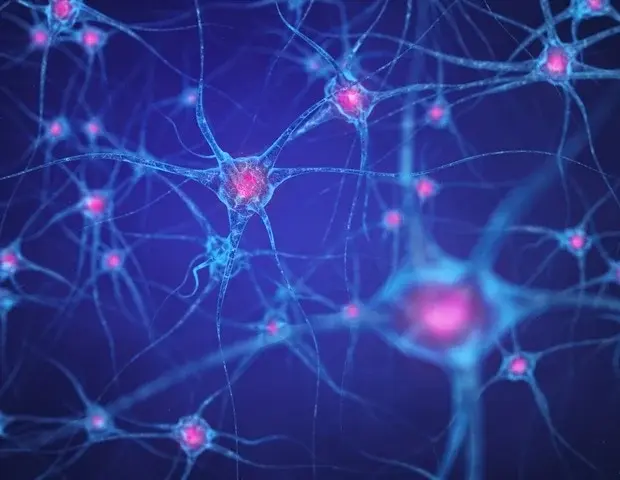
Researchers have demonstrated that environmental experiences trigger widespread changes in brain cell connections. The study focused on how external stimuli alter synaptic architecture. Scientists used advanced mapping technology to track billions of individual connections. Mice exposed to enriched environments showed distinct synaptic shifts. These findings highlight the brain's adaptive capacity.
Wellness insights
 Social support networks of older adults before, during and after the COVID-19 pandemic
 College Mental Health Crisis Shows Signs of Easing
 Why Depression Subtypes Matter: 25 Years of Clinical Lessons
 Choosing Adjunctive Therapy for Major Depressive Disorder: A Focus on Non-Negotiables
The research team developed a novel method to map and study synaptic networks. This technology allowed them to observe how brain activity changes in response to environmental input. Mice placed in enriched settings exhibited altered connections across different cell populations. The study confirms that the brain physically reorganizes itself based on experience.
The core finding centers on synaptic plasticity. When mice were exposed to a richer environment, their brain cells formed new connections. This rewiring was not limited to a single region. It affected multiple populations of neurons. The technology used could resolve individual synapses at scale. This level of detail was previously unattainable.
What Does This Mean for Human Brain Development?
The implications for neuroscience are significant. It suggests that the brain is not a static structure. It is a dynamic system that adapts to its surroundings. The study provides a mechanism for how learning and memory are physically encoded.
While the study used mice, the principles likely apply to humans. Environmental enrichment in childhood can shape neural development. The research opens doors for targeted interventions. Understanding this mechanism could lead to better strategies for cognitive enhancement. It also informs how we design learning environments.
The study underscores that experience is a powerful force in brain development. It challenges the notion of fixed genetic destiny. Instead, it supports a model of continuous adaptation. This has broad implications for education and therapy.
Frequently Asked Questions
Did the study use human subjects? No, the research was conducted on mice. However, the synaptic mechanisms identified are conserved across mammals.
Can this technology be applied to human brains? The novel mapping technology was designed for small animal models. Scaling it to human brains remains a future challenge.
How does this relate to learning? The study shows that learning physically alters brain connections. This provides a biological basis for how experiences become memories.