
These perceptual traits were not random; instead, they clustered around
Researchers have identified consistent patterns in how people describe the visual and spatial qualities of near-death experiences, suggesting shared perceptual features across diverse accounts. A study published in Frontiers in Psychology analyzed narrative reports from individuals who underwent life-threatening events, focusing on geometric structures and color perceptions reported during these episodes. The findings indicate that despite cultural and individual differences, certain spatial and chromatic elements recur with notable frequency, pointing to potential commonalities in altered states of consciousness. The research team examined over 200 documented cases, extracting descriptions of environments characterized by boundless spaces, geometric patterns, and vivid, often unnatural colors. Participants frequently reported experiencing environments that defied ordinary spatial logic—such as infinite voids, radiating light fields, or symmetrical architectures—accompanied by hues not typically found in everyday perception, including intense golds, whites, and indigos.
Wellness insights
 Brain Wiring Explains Why Trauma Victims Struggle To Find Joy
 Healing Journey: A Therapist Reflects on Processing Deep Childhood Trauma
 Forest walks boost mood through sound and biodiversity awareness
 What Counselling in Two Different Countries Taught Me: Hansel Wong on Connection, Curiosity, and Culture
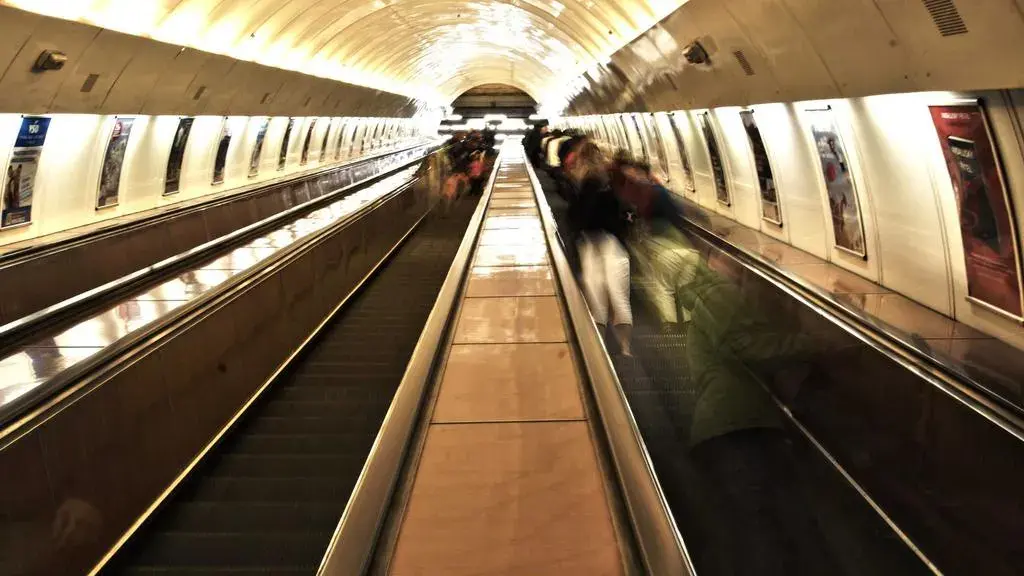
These perceptual traits were not random; instead, they clustered around specific configurations, suggesting a structured phenomenology underlying near-death experiences. Recurring Spatial Patterns in NDE Narratives Many accounts described a sensation of moving through or observing spaces with fractal-like complexity or radial symmetry, where depth and distance felt distorted or absent. Some individuals reported being enveloped by fields of light that seemed to have texture or form, while others described traversing tunnels or chambers with geometric precision that evoked mathematical regularity. These spatial perceptions were often paired with a sense of timelessness or non-locality, reinforcing the idea that the brain may generate consistent perceptual models under extreme physiological stress. How Do Color Perceptions Shift During Life-Threatening Events? Color reports in near-death experiences frequently deviated from normal visual experience, with describers noting colors that felt more real than realor possessing emotional resonance beyond their visual properties.
Gold and white light were most commonly cited, often described as emanating
Gold and white light were most commonly cited, often described as emanating from a source without casting shadows, while blue and violet hues appeared in contexts associated with peace or transition. Researchers suggest these chromatic experiences may relate to heightened activity in visual cortex areas or altered thalamocortical signaling during cerebral hypoxia or neurochemical surge. The consistency of these perceptual features across cases challenges the notion that near-death experiences are purely idiosyncratic or culturally constructed. Instead, the data support the idea that certain neurobiological processes may produce predictable alterations in spatial and color perception when the brain operates under extraordinary conditions. While the study does not explain the origin of these experiences, it provides a framework for future investigation into how perception transforms during altered states of consciousness. Frequently Asked Questions What does perceptual geometryrefer to in this context?
It refers to the structured spatial patterns—such as symmetry, depth distortion, or infinite extension—reported by individuals during near-death experiences, which suggest organized rather than chaotic visual perceptions. Are the colors reported in NDEs similar to those in hallucinations or meditation? While some overlap exists, the colors in NDEs are often described as more intense, emotionally charged, and lacking conventional sources, distinguishing them from typical visual hallucinations or meditative imagery. Could these findings help explain other altered states of perception? Yes, identifying common perceptual traits in NDEs may inform research into similar phenomena in mystical experiences, psychosis, or psychedelic states, where geometry and color also play prominent roles.