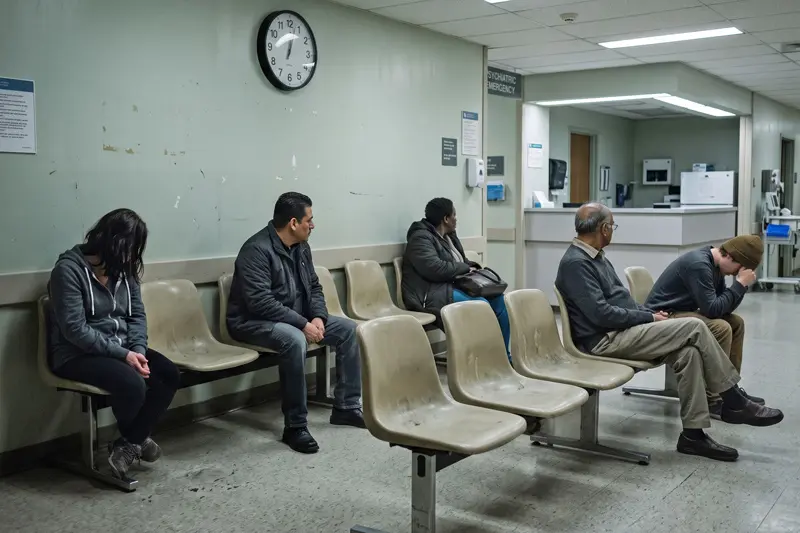
As a result, individuals with serious mental illness frequently cycle through
Nearly a million New Yorkers lack access to mental health care in a city where the need has outpaced available services for years. A strained workforce, fragmented safety net, and deep racial and economic disparities have left many without support, pushing the system to a breaking point. This gap has become especially visible in emergency rooms, where people in crisis often end up waiting for hours or days for a psychiatric bed. The crisis stems from chronic underfunding, burnout among providers, and a shortage of culturally competent clinicians, particularly in low-income neighborhoods and communities of color. Many clinics have closed or reduced hours, while others struggle to hire and retain staff due to low pay and high caseloads.
Wellness insights
 Brain Wiring Explains Why Trauma Victims Struggle To Find Joy
 Healing Journey: A Therapist Reflects on Processing Deep Childhood Trauma
 Forest walks boost mood through sound and biodiversity awareness
 What Counselling in Two Different Countries Taught Me: Hansel Wong on Connection, Curiosity, and Culture
As a result, individuals with serious mental illness frequently cycle through hospitals, shelters, and jails instead of receiving consistent outpatient care. How Emergency Rooms Became the Default Safety Net In the psychiatric wing of city hospitals, fluorescent lights stay on through the night as patients wait for evaluation or transfer. Doctors and nurses report seeing the same faces return repeatedly, not because treatment failed, but because follow-up care is unavailable. One psychiatrist described the ER as „the only door left open” when community clinics are full or inaccessible. Data shows that wait times for inpatient psychiatric beds can exceed 72 hours during peak periods, disproportionately affecting Black and Latino New Yorkers. What Happens When Care Is Delayed or Denied? Without timely intervention, mental health conditions worsen, leading to increased suffering, homelessness, incarceration, or suicide.
Families often bear the burden of care without training or support
Families often bear the burden of care without training or support, while schools and workplaces see declining productivity and engagement. Advocates warn that the city’s current approach treats symptoms rather than root causes, calling for urgent investment in workforce development, mobile crisis teams, and housing-first models. Frequently Asked Questions Why can’t New York City hire more mental health professionals? The city faces a national shortage of licensed clinicians, compounded by low Medicaid reimbursement rates and high living costs that make public sector jobs less attractive compared to private practice or suburban settings. Are there any successful models being tested in the city? Yes, pilot programs like NYC Well and the Behavioral Health Emergency Assistance Response Division (B-HEARD) have shown promise by diverting non-violent 911 calls to mental health responders instead of police, reducing ER visits and arrests. How does insurance coverage affect access to care?
Even among those with insurance, many providers do not accept Medicaid or offer sliding-scale fees, creating financial barriers that disproportionately impact low-income residents despite theoretical coverage.